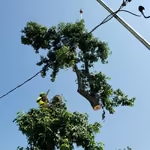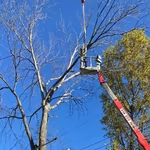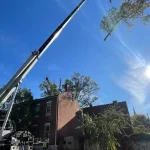
A St. Louis oak affected by Hypoxylon canker may be beyond recovery when fungal tissue and bark loss involve the main trunk, large portions of the crown have died, or decay has left the tree structurally weak. Removal becomes more likely when that tree can strike a home, vehicle, sidewalk, utility line, or neighboring property.
Earlier stress symptoms do not prove that the disease is active. Limited branch dieback, thinning leaves, or drought stress may still justify supportive care, monitoring, or selective pruning after an arborist evaluates the tree. There is no direct cure once an active Hypoxylon canker is established, and dead tissue cannot be restored. The decision depends on diagnosis, remaining structure, the extent of decline, and the surroundings.
Hypoxylon Canker Is Part of a Larger Decline Process
Hypoxylon canker is a fungal disease that damages the inner bark and sapwood, the tissues that help move water through the tree. Current technical sources may call it Biscogniauxia canker or Biscogniauxia dieback because the fungus has been reclassified.
The Missouri Department of Conservation’s Hypoxylon canker guidance explains that the fungus can colonize healthy trees without causing cankers, then become destructive after the tree is damaged or severely stressed. It is often one factor in a broader decline rather than the only reason an oak is failing.
Red-oak-group species are especially susceptible. Around Greater St. Louis, that group includes familiar landscape trees such as northern red oak, pin oak, and black oak. White oaks and other species may also develop problems, so species alone cannot confirm or rule out the disease.
St. Louis Conditions That Can Weaken Mature Oaks
Hypoxylon symptoms often follow stress that reduces the oak’s ability to maintain healthy tissue. In the St. Louis region, a mature tree may endure summer heat, dry periods, severe thunderstorms, high winds, winter injury, repeated defoliation, or sudden temperature changes.
Problems around the root zone can be just as important. Construction equipment, grading, trenching, new sidewalks, driveway work, added soil, and repeated traffic may cut roots or compact the soil. Clay-heavy soil can hold too much water during wet periods and become hard during drought, both of which can limit root function.
University of Missouri Extension describes tree decline as a process in which weather, defoliation, root damage, soil compaction, and later attacks by cankers, root rots, or borers may build on one another. Its tree-decline guidance also notes that construction-related stress may take years to become obvious.
Our broader article on why Missouri oak trees are declining covers the regional stress complex in more detail. This article stays focused on the point where Hypoxylon canker changes the outlook for one tree.
Early Signs That Need Professional Evaluation
Early decline can be easy to confuse with drought, insect feeding, root problems, or another disease. A thinning crown and scattered dead branches show that the oak is under stress, but they do not identify the cause.
Changes worth reporting include:
- Fewer or smaller leaves than in previous seasons
- Sparse foliage in the upper crown
- Small patches of brown or wilted leaves
- Dead twigs or branches that continue to spread
- Sunken or depressed bark on limbs or the trunk
- Peeling bark that exposes tan, silvery, gray, or powdery tissue
- New insect activity, holes, or loose bark on declining wood
The color of exposed fungal tissue can change as the disease develops. According to the Missouri Botanical Garden’s overview of Biscogniauxia dieback, bark may slough away and reveal silvery or cushion-like fungal material. Older areas may become darker.
Do not peel bark away to look for fungus or cut into the trunk for confirmation. Photos are useful for documenting changes, but a reliable recommendation requires an on-site evaluation.
Advanced Trunk Involvement Signals a Poor Prognosis
The outlook becomes poor when active fungal areas extend across the main trunk, bark loss is widespread, major crown sections have died, or the wood has become brittle. At that point, the question is no longer limited to tree health. Structural failure must also be considered.
Advanced concerns include:
- Large areas of bark falling away from the trunk
- Extensive tan, gray, silver, or black fungal tissue
- Rapidly expanding branch dieback
- Major dead limbs over occupied areas
- Trunk cracks, cavities, or crumbling wood
- A sparse crown paired with main-stem damage
- Noticeable movement or failure at large branch unions
The Missouri Department of Conservation states that there is no treatment once a tree is showing Hypoxylon symptoms and recommends prompt removal in residential or high-traffic settings because infected trees may become brittle. That guidance does not mean a homeowner should diagnose the disease from bark color alone. It means confirmed, advanced disease near a target deserves timely planning.
Branch-Limited Damage Differs From Main-Trunk Disease
An oak with one declining branch presents a different decision from an oak with fungal tissue across the main trunk. If damage appears confined to a branch and the remaining crown and trunk are sound, an arborist may consider selective pruning and continued monitoring.
Pruning cannot reverse infected tissue or cure Hypoxylon. It may remove dead or compromised branches after the tree’s structure and diagnosis have been reviewed. Our professional tree-pruning service covers deadwood removal and structural pruning when that work is appropriate.
Main-trunk involvement is more serious because the trunk supports the entire crown. Removing one limb does not correct widespread sapwood loss, extensive decay, or a failing main stem. A large pruning cut can also add stress to an already weakened oak, so work should not begin without a clear objective.
Similar Oak Problems Need to Be Ruled Out
Canopy thinning and branch dieback occur in several oak problems. Hypoxylon canker should not be identified from leaf color, drought history, or one photograph.
Oak wilt is a separate fungal disease that affects water-conducting tissue and can spread through root grafts or insects. The Missouri Department of Conservation’s oak-wilt guidance describes upper-crown browning, wilting, and rapid leaf loss in red oaks. Hypoxylon is more closely associated with stressed wood, bark sloughing, and exposed fungal mats.
Other possibilities include:
- Borer activity in already stressed wood
- Root rot or damaged structural roots
- Bacterial leaf scorch
- Tubakia leaf spot or anthracnose
- Ordinary drought scorch
- Construction injury or soil compaction
Several problems may occur in the same tree. Our St. Louis pest and disease guide provides a broader background, while our pest and disease management service addresses diagnosis and management options. Laboratory testing may be appropriate when symptoms point toward oak wilt or another condition that affects how nearby trees should be managed.
Our Arborists Evaluate Health, Structure, and Risk
An on-site evaluation looks beyond the visible fungal area. Our ISA Certified Arborists consider the oak’s species, crown condition, trunk, root zone, prior injuries, recent site changes, and the amount of sound structure that remains.
We also look at what could be struck if a branch or the whole tree fails:
- Homes, garages, and outbuildings
- Streets, sidewalks, and driveways
- Parked vehicles
- Utility lines
- Neighboring property
- Patios, play areas, and other occupied spaces
The same amount of decline can lead to different recommendations on different properties. A tree in an open area may allow time for monitoring. A brittle oak beside a bedroom, street, or power line may require a faster response.
Our arborist consultation service includes tree-health, structural, and risk evaluation with clear recommendations. Diagnosis comes before treatment, pruning, or removal.
Supportive Care May Still Be Reasonable Before Advanced Disease
Supportive care is most useful when an oak is stressed but has not developed extensive main-trunk cankers or severe structural decline. The goal is to improve growing conditions and reduce avoidable stress, not to claim that dead or infected tissue can recover.
Depending on the site and diagnosis, recommendations may include:
- Monitoring the crown and exposed bark for change
- Protecting the root zone from equipment and repeated traffic
- Managing drought stress with an appropriate watering plan
- Correcting mulch or grade problems around the root flare
- Addressing a confirmed pest or separate disease
- Pruning selected dead branches when the tree can tolerate the work
Fertilizer is not an automatic answer for a declining oak. Soil conditions, root damage, moisture, and the actual diagnosis matter. Treatment intended for another disease will not cure Hypoxylon canker.
Removal May Be Safer After Recovery Is No Longer Realistic
Removal may be recommended when active disease affects the main trunk, much of the crown is dead, the wood is brittle, or structural defects leave an unacceptable risk near people or property. The recommendation should still follow an inspection rather than a homeowner’s visual guess.
Our tree-removal service is the next step when an affected oak cannot be retained reasonably. We plan removal around homes, garages, utilities, landscaping, and tight access. The full removal scope is handled separately from the disease evaluation.
Do not climb a declining oak, strike the trunk to test it, or cut large dead limbs. Brittle wood can break differently from sound wood, and dead branches may fail before the rest of the tree appears unstable.
Protecting Nearby and Currently Healthy Oaks
Removing a symptomatic tree does not eliminate all Hypoxylon fungus from the area. The organism may already be present without causing disease in vigorous trees. Prevention centers on reducing the stresses that allow cankers and decline to develop.
Practical priorities include protecting roots during construction, avoiding unnecessary grade changes, limiting soil compaction, and watching high-value oaks during drought. Repeated defoliation, storm damage, and root injury should be addressed early.
Do not copy a treatment plan from one oak to another. Red, white, pin, post, and other oaks differ in condition, site history, and exposure. An evaluation can separate a local branch problem from broader decline and help avoid unnecessary removal of a tree that still has reasonable structure.
Schedule an Oak Evaluation in Greater St. Louis
Mathias Precision Tree Service has served the Greater St. Louis and St. Charles area for more than 20 years. Our locally based company has ISA Certified Arborists on staff and serves communities including Hazelwood, Florissant, Maryland Heights, Chesterfield, St. Charles, O’Fallon, and St. Peters.
If your oak has peeling bark, exposed fungal tissue, canopy thinning, or spreading dieback, arrange an evaluation before choosing treatment, pruning, or removal. Call (314) 228-6510 or contact our team to schedule an arborist consultation. We will evaluate the tree’s health, structure, and surrounding risk, then explain the practical next step.