Commercial properties can identify tree hazards by checking for dead branches, trunk cracks, decay, leaning trees, and exposed roots. Regular inspections can detect potential risks early, while proactive tree maintenance helps reduce property damage and protect employees, visitors, and customers.
What Is a Tree Hazard on a Commercial Property?
A tree hazard involves a tree or tree part with defects that could contribute to failure and potentially injure people or damage property. On commercial sites, potential targets include pedestrians, parked vehicles, office buildings, storefronts, walkways, and utility lines.
A defective tree in an area with no people or property nearby may present a lower risk than the same tree over a busy entrance. Property managers should therefore assess both the tree’s condition and the consequences of a potential failure.
How Structural Defects Threaten Commercial Spaces
Commercial landscapes can expose trees to conditions that affect their health and stability. Limited soil volume, compacted ground, landscaping equipment, snowplows, and construction activity can damage roots or contribute to declining tree health.
When strong winds, ice accumulation, or heavy rain occur, existing defects may increase the likelihood of branch breakage, trunk failure, or uprooting. The International Society of Arboriculture’s Recognizing Tree Risk guide explains common defects and how qualified arborists evaluate the likelihood of failure and the potential targets.
Because commercial properties often experience substantial pedestrian and vehicle traffic, identifying hazards and prioritizing high-use areas are essential parts of responsible property management.
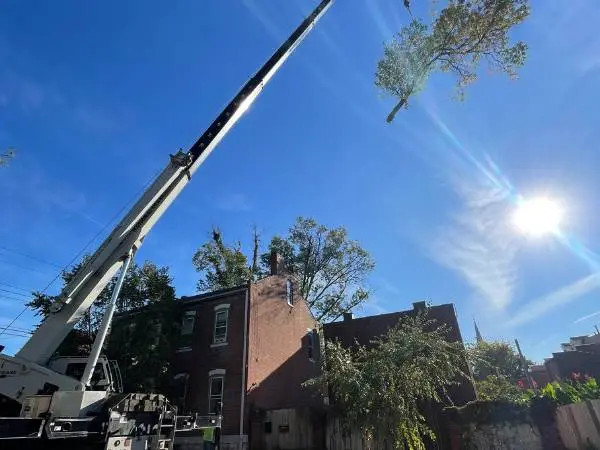
How Do Property Managers Identify Tree Hazards?
Property managers can watch for several warning signs during routine grounds inspections. These checks help identify concerns, but they do not replace an assessment by a qualified arborist.
- Inspect the root zone: Look for raised soil, exposed or damaged roots, and newly cracked pavement around the tree. Soil movement or a sudden change in lean can indicate a stability problem.
- Check for fungal growth: Mushrooms or fungal conks around the trunk or roots may indicate decay. Their presence does not establish the extent of internal damage, so an arborist should evaluate the tree.
- Look for trunk cracks and cavities: Deep cracks, large cavities, and areas of damaged wood may compromise structural integrity, particularly when they occur alongside other defects.
- Identify dead or hanging branches: Deadwood and broken limbs over sidewalks, entrances, parking spaces, or buildings can fall without warning, even from trees that otherwise look healthy.
- Examine branch unions: Narrow, V-shaped unions and included bark can create weak attachments, especially when two large stems grow from the same point.
- Review maintenance history: Trees that have been topped, poorly pruned, or neglected may develop weak regrowth or structural defects. Review your property’s commercial tree service needs and address recurring concerns.
For additional warning signs, read our blog, What an Arborist Looks for When a Tree Is Leaning but Hasn’t Fallen. It explains why an arborist considers root conditions, changes in lean, trunk integrity, and nearby targets rather than judging a tree by its appearance alone.
Why Are Regular Tree Risk Assessments Necessary?
Regular tree risk assessments help property managers identify changes that may not be obvious during routine grounds maintenance.
A tree that appeared stable two years ago may have developed decay, sustained storm damage, or lost roots during nearby excavation. Periodic professional assessments establish a record of observed conditions and help managers prioritize maintenance, plan budgets, and document decisions.
How Severe Weather Exposes Hidden Defects
High winds, heavy snow, ice, and saturated soil can place additional stress on trees. These conditions may expose weaknesses in branches, trunks, and root systems that were not obvious in calm weather.
A small crack can widen under wind pressure, while a damaged root system may struggle to anchor a tree in saturated ground. Read Mathias Precision Tree Service’s article on why healthy-looking trees can fall during storms in Augusta, MO. It explains how internal decay, root problems, and included bark can create serious risks even when a tree’s canopy appears healthy.
Schedule inspections before severe-weather seasons and arrange additional assessments after significant storms, especially when trees have broken limbs, shifted soil, or begun leaning. For guidance on responding to storm damage, see What to Do After Storm Damage in St. Louis, MO.
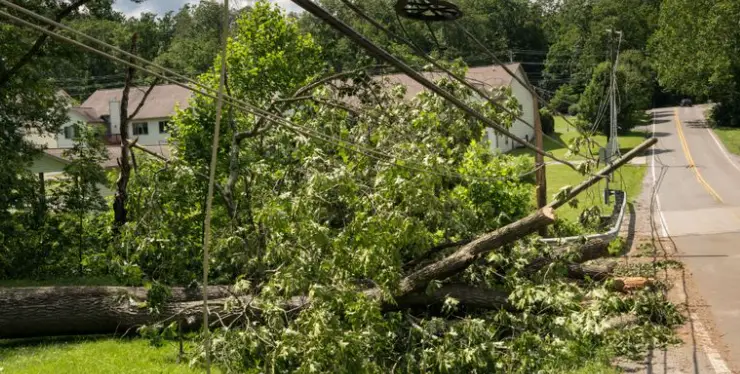
Which Trees Pose the Greatest Risk on Commercial Properties?
Certain trees and growing conditions deserve closer attention because they may increase the likelihood of failure or expose people and property to greater consequences.
- Overmature shade trees: Large, aging trees may develop internal decay, deadwood, weak branch unions, or damage accumulated over decades. Age alone does not mean a tree is unsafe, but its condition warrants evaluation.
- Parking lot island trees: Trees growing in small paved areas often have restricted root space and face heat, drought, and soil compaction.
- Construction-damaged trees: Excavation, trenching, grading, and paving can damage roots and affect stability. Problems may become apparent long after the work is complete.
- Previously topped trees: Topping can encourage weakly attached regrowth and create large wounds. An arborist can assess whether corrective pruning can manage the resulting defects.
- Trees near utility lines: Trees growing close to electrical lines need careful management. Never attempt to prune branches touching or approaching power lines yourself. Contact the utility provider and qualified professionals.
- Diseased or pest-affected trees: Some pests and diseases weaken branches, trunks, or root systems. Early identification can help determine whether treatment, pruning, monitoring, or removal is appropriate.
Protecting Vehicles, Pedestrians, and Infrastructure
Commercial property managers can reduce exposure by including tree care in their wider safety and maintenance plans.
- Maintain canopy clearance: Keep branches from obstructing pedestrian routes, delivery access, and emergency vehicle routes.
- Protect root zones: Use appropriate barriers to limit vehicle traffic, soil compaction, and equipment damage near tree roots.
- Monitor sidewalks and pavement: Check for lifted concrete, uneven surfaces, and root-related trip hazards. Address accessibility concerns promptly.
- Remove hazardous debris: Arrange professional removal of deadwood and broken branches that threaten people, vehicles, or buildings.
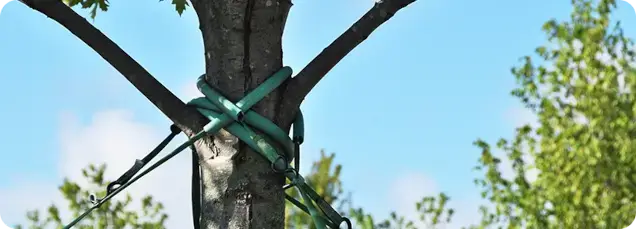
- Choose appropriate mitigation: An arborist can determine whether pruning, cabling, bracing, monitoring, or hazardous tree removal is the most suitable response.
| Tree Defect | Why It Matters | Potential Mitigation |
|---|---|---|
| Narrow branch unions or included bark | May create weak attachments and increase splitting risk. | Professional structural pruning or supplemental support when appropriate. |
| Fungal growth or cavities | May indicate internal decay that affects structural strength. | Arborist assessment, possible diagnostic testing, monitoring, or removal. |
| Deadwood in the canopy | Dead branches may break and fall onto people or property. | Professional pruning to remove hazardous branches. |
| Root damage or soil movement | May affect anchorage and tree stability. | Prompt risk assessment and management of the underlying site conditions. |
When Is the Best Time to Inspect for Tree Hazards?
Commercial properties should schedule inspections throughout the year according to tree condition, site use, weather exposure, and maintenance history. Late fall and winter can make some structural defects easier to see on deciduous trees after leaves drop, which is why we recommend a fall tree risk assessment. However, property managers should not wait for a particular season when warning signs appear.
Scheduling Commercial Tree Inspections
- Manage risk proactively: Establish a regular inspection schedule based on the site’s tree inventory and risk profile.
- Prioritize high-traffic areas: Inspect trees near entrances, parking lots, walkways, loading zones, and outdoor seating.
- Prepare for severe weather: Use National Weather Service thunderstorm safety guidance to support seasonal planning, and arrange tree assessments before expected high-risk weather.
- Reduce emergency disruption: Identifying defects before a failure can help avoid sudden closures, access problems, and expensive emergency work.
- Create a maintenance plan: Work with a qualified arborist to prioritize recommended actions, record completed work, and plan future inspections.
Protecting Your Commercial Property With Mathias Precision Tree Service
Mathias Precision Tree Service provides commercial tree care and risk assessment services for property managers, businesses, HOAs, and other organizations across the St. Louis and St. Charles region.
Our team evaluates visible structural defects, root concerns, tree health, and site conditions to help property owners make informed decisions. Depending on the findings, recommendations may include tree pruning, ongoing monitoring, additional assessment, or tree removal when a hazard cannot be managed adequately through other measures.
Professional planning also helps property managers coordinate work around buildings, parking areas, landscaping, and pedestrian access. If a tree appears unstable or has damaged branches over a busy area, restrict access to the immediate hazard and arrange a professional evaluation.
Contact Mathias Precision Tree Service for assistance with commercial tree services. Call (314) 228-6510 or request a free estimate.
Frequently Asked Questions
What Is a Commercial Tree Risk Assessment?
A tree risk assessment is an evaluation by a qualified arborist to identify defects, assess the likelihood of tree or branch failure, and consider the potential consequences for people and property. The findings help determine appropriate next steps, such as pruning, monitoring, further assessment, or removal.
How Can Hazardous Trees Affect Commercial Liability?
A tree failure that damages property or injures someone may lead to legal claims. Liability depends on the circumstances and applicable law, including what the property owner knew or reasonably should have known and how the risk was managed. Documented inspections and timely responses can support responsible property management. Our article on St. Louis tree law and liability covers related questions.
Will Inspecting My Trees Mean I Have to Remove Them?
No. Many trees can remain in place with appropriate pruning, monitoring, or other mitigation. Removal may be recommended when significant defects create an unacceptable risk that cannot be managed effectively through other measures.
How Often Should Property Managers Schedule Tree Inspections?
Inspection frequency depends on the site’s tree conditions, exposure, usage, and maintenance history. A qualified arborist can recommend a suitable schedule. Additional assessments may be needed after severe storms, nearby construction, or visible changes such as sudden leaning and root movement.
How Is Commercial Tree Hazard Mitigation Priced?
Costs depend on tree size, condition, site accessibility, the complexity of the work, and the equipment required. An assessment helps establish the recommended scope, after which the tree service can provide a proposal outlining the work and associated costs.
Can a Tree With Fungal Growth Be Saved?
Sometimes. Fungal growth can indicate decay, but it does not automatically mean the tree must be removed. An arborist can evaluate the location and extent of the suspected decay, assess structural concerns, and recommend suitable action.
Which Commercial Landscapes Face Greater Tree Risks?
Properties with compacted soil, restricted root space, extensive paving, construction activity, and heavy pedestrian or vehicle traffic may face additional tree-management challenges. Parking lot islands and trees close to buildings or walkways deserve particular attention because of their growing conditions and the potential consequences of failure.
Do You Provide Emergency Hazard Removal Services?
Mathias Precision Tree Service provides emergency tree services for hazardous situations, including storm-damaged trees and dangerous limbs. If a tree is unstable or threatens a building, keep people away and contact a professional. If power lines are involved, stay clear and notify the utility provider.
How Long Does a Commercial Tree Inspection Take?
The time required depends on the property’s size, the number of trees, access conditions, and the complexity of any suspected hazards. An assessment of one tree may take relatively little time, while a large commercial property may require several hours or more.
Do Healthy-Looking Trees Still Need Inspections?
Yes. A full canopy does not guarantee structural stability. Internal decay, damaged roots, cavities, and weak branch attachments may develop while a tree continues to produce healthy-looking foliage. Regular inspections can help identify problems that are difficult to see from the ground.
Does Mathias Precision Tree Service Provide Tree Services in Maryland Heights, MO, and Surrounding Communities?
Yes. Mathias Precision Tree Service provides tree services in Maryland Heights, MO, and serves surrounding communities throughout the St. Louis area. Services include tree risk assessments, tree pruning, tree removal, arborist consultations, and emergency tree services. Call (314) 228-6510 or request a free estimate to discuss your commercial property’s tree care needs.