Key Takeaways
- Oak wilt, emerald ash borer, Dutch elm disease, and anthracnose destroy thousands of St. Louis trees annually through fungal infections and insect infestations.
- Most tree diseases become untreatable by the time visible leaf symptoms appear early detection through professional inspection is critical for saving trees.
- Missouri’s humid summers, clay soils, and freeze-thaw cycles create ideal conditions for fungal pathogens and pest reproduction throughout Eastern Missouri.
- Proper pruning timing, soil health maintenance, and preventative treatments reduce infection risk significantly for residential and commercial properties.
Tree pests and diseases are a constant threat to homeowners across St. Louis, Missouri. From St. Charles, Chesterfield, Florissant to O’Fallon, infected or pest-damaged trees can become serious threats to property value, landscape aesthetics, and safety when they suddenly die and become hazardous. The challenge is that many diseased trees don’t always look sick at first glance. Internal decay, root rot, and insect tunneling can develop over months or years without obvious signs until the tree suddenly collapses or becomes too damaged to save.
Missouri’s humid continental climate, clay-heavy soils, and extreme seasonal temperature swings accelerate tree decline, especially after drought stress, construction damage, or winter injury. Knowing what warning signs to watch for and which pests and diseases are most destructive can help property owners avoid losing valuable mature trees and spending thousands on emergency removal. In this article, we’ll look at the most dangerous tree pests and diseases found in St. Louis, the red flags that shouldn’t be ignored, and when it’s time to bring in a professional arborist for treatment or removal.
The Unique Pest and Disease Pressure in St. Louis
St. Louis experiences hot humid summers, cold winters, severe spring thunderstorms, and occasional tornadoes. These conditions create year-round stress for trees. Summer temperatures regularly exceed 90°F with high humidity that promotes fungal spore germination and insect reproduction. Winter cycles cause bark cracking and root stress. Spring rains provide moisture for fungal growth while creating open wounds susceptible to infection.
Urban development across St. Louis County has fragmented natural ecosystems, concentrating trees in isolated landscape settings where they face increased stress from compacted clay soils, limited root space, poor drainage, and air pollution. These conditions weaken tree immune systems, making them more susceptible to pest attacks and disease infections that healthy trees might resist naturally.
Trees face two primary threats:
- insect infestations that bore into bark and consume living tissue, and
- fungal pathogens that invade vascular systems and block water transport.
Emerald Ash Borer: The Ash Tree Killer
Emerald ash borer (Agrilus planipennis) has devastated ash tree populations across Missouri since arriving in St. Louis County approximately 15 years ago. This invasive beetle from Asia has killed millions of ash trees throughout North America and remains the most destructive tree pest in our region.
The most dangerous aspect of emerald ash borer is its ability to infest trees silently for 1-2 years before visible symptoms appear. Larvae feed beneath the bark on the cambium layer, creating S-shaped galleries that disrupt nutrient and water transport. By the time leaf canopy thins or D-shaped exit holes appear, the tree is already critically damaged.
Warning signs include –
- D-shaped exit holes approximately 1/8 inch wide in bark
- thinning canopy with yellowing or browning leaves
- vertical bark cracks exposing larval galleries
- epicormic shoots (new growth) on trunk or large branches
- increased woodpecker activity stripping bark, and
- S-shaped tunnels visible when bark is removed.
Once infestation reaches critical levels, ash trees typically die within 3-4 years. Early detection and preventative treatment can save high-value trees, but heavily infested specimens require removal to prevent spreading beetles to nearby ash trees.
Oak Wilt: The Fast-Moving Oak Killer
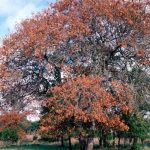
Oak wilt (Bretziella fagacearum) is a deadly fungal disease affecting all oak species, particularly red oaks which can die within 3-4 weeks of infection. White oaks decline more slowly but eventually succumb within 1-2 years.
Oak wilt spreads through root grafts between nearby trees and via sap-feeding beetles that carry fungal spores from fresh pruning wounds or wounded trees to healthy oaks. Spring and early summer represent peak infection periods when beetles are most active.
Warning signs include –
- rapid leaf browning starting at canopy top
- leaves turning brown while still attached to branches
- vein discoloration with brown streaks along leaf veins
- wilting and drooping foliage, and fungal pressure pads under bark (rare but definitive).
Once a tree is infected, oak wilt cannot be cured, only prevented from spreading to nearby healthy oaks through root graft interruption and removal of infected trees. Red oaks can die in 3-4 weeks, making immediate action critical when symptoms appear.
Dutch Elm Disease: The Century-Old Threat
Dutch elm disease (Ophiostoma novo-ulmi) continues to threaten elm trees throughout St. Louis decades after its initial introduction. This fungal pathogen blocks water transport in xylem vessels, causing rapid canopy dieback and eventual death.
Elm bark beetles carry fungal spores from infected trees to healthy ones through feeding wounds. Root grafts between adjacent elms also transmit the disease underground.
Warning signs include –
- wilting and curling leaves on individual branches
- yellowing followed by browning of foliage
- leaves remaining attached to dead branches
- dark streaks in sapwood under bark, and fungal fruiting bodies at the base of trees (rare)
Mature elms can die within 1-2 years of infection. Younger trees may perish within months.
Anthracnose and Foliar Diseases: The Spring Fungal Threat
Anthracnose affects multiple St. Louis tree species including maple, ash, sycamore, and oak. This fungal disease thrives in cool, wet spring weather and causes severe defoliation, twig dieback, and aesthetic damage.
While rarely fatal to mature trees, anthracnose weakens trees over time through repeated defoliation, making them susceptible to secondary pests and diseases.
Warning signs include –
- irregular brown blotches on leaves following veins
- leaf distortion and curling
- premature leaf drop in spring, dead twigs and small branches, and
- canopy appearing thin or patchy.
- Repeated infections year after year significantly reduce tree vigor and longevity.
Root Rot: The Silent Killer
Root rot pathogens, including Phytophthora and Armillaria attack tree roots, disrupting water and nutrient uptake. Wet, poorly drained clay soils common throughout St. Louis create ideal conditions for these fungal pathogens.
Warning signs include –
- general canopy decline without an obvious cause
- yellowing and stunted leaves, dieback starting at the canopy top
- mushrooms at base of trunk
- root decay visible when soil removed, and
- tree stability issues including leaning or root heaving.
Root rot progresses slowly but is usually fatal once symptoms appear. Prevention through proper drainage and correct planting depth is critical.
How to Identify Pest and Disease Problems on Your Property
Regular inspections help identify problems before irreversible damage occurs.
- Inspect trees twice a year – early spring and late fall for early signs of pests and disease.
- Look for canopy dieback, including bare branches, brittle limbs, or premature leaf drop.
- Check for fungal growth, such as shelf mushrooms or conks, around the trunk base or root flare.
- Examine bark for exit holes, sawdust-like boring dust, sap seepage, or deep vertical cracks.
- Watch for root problems, including sudden leaning, cracked soil, exposed roots, or ground heaving near the trunk.
Identify common disease and pest symptoms,
- D-shaped holes on ash trees, rapid browning of oak leaves
- wilting elm branches, powdery white leaf coatings, or brown leaf blotches.
- Trees that have lost more than 50% of their canopy often have a poor chance of long-term survival and should be evaluated by a professional.
When to Call Professional Tree Pest and Disease Experts
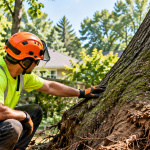
Some warning signs require immediate professional assessment from an ISA-Certified Arborist in St. Louis, Missouri. This includes –
- rapid canopy dieback occurring over weeks rather than months
- multiple trees in the same area showing identical symptoms
- large trunk cavities or fungal growth at the base
- trees showing stress near known infected specimens
- emerald ash borer exit holes discovered on ash trees
- oak wilt symptoms appearing on red oaks in spring, and trees with pest or disease damage overhanging structures or utility lines.
Professional services needed include accurate diagnosis through laboratory testing when needed, systemic treatment applications requiring specialized equipment, emergency removal of hazardous diseased trees, preventative treatments for high-value trees, root injection therapies for fungal diseases, and cabling and bracing for weakened but salvageable trees.
Call a professional tree pest and disease expert in St. Louis, MO when trees show rapid dieback, identical symptoms across multiple trees, large trunk cavities, fungal growth, or signs of pests like emerald ash borer or oak wilt, especially near structures or utility lines. ISA Certified Arborists provide accurate diagnoses, systemic treatments, emergency removal, preventative care, and structural support for weakened trees.
Mathias Precision Tree Service, a family-owned company serving Eastern Missouri for over 20 years, offers certified, insured, and expert tree care, including pest and disease management, pruning, removal, and full property cleanup, ensuring healthy, safe, and well-maintained trees. We also offer Sioux property owners a reliable tree care partner who knows the area and the work. We also provide tree removal, tree pruning, tree trimming, 24/7 emergency tree service,arborist consultations, stump grinding, and commercial tree services for property owners across Missouri. Call us today at (314) 228-6510 for a free estimate.
Frequently Asked Questions About Pest and Disease Management in St. Louis, MO
How quickly can the emerald ash borer kill an ash tree?
Typically 3-4 years from initial infestation to death, though heavily infested trees may perish faster.
Can oak wilt be cured once a tree is infected?
No. Oak wilt has no cure. Treatment focuses on preventing spread to nearby healthy oaks through root graft interruption and removing infected trees.
What’s the best time to prune oaks in St. Louis?
Only during winter dormancy (November through March) when oak wilt fungi are inactive and beetles aren’t flying.
How do I know if my tree has root rot?
Look for general canopy decline, yellowing leaves, mushrooms at trunk base, and poor tree stability. Soil testing and root inspection confirm diagnosis.
Are preventative treatments worth it for ash trees?
Yes, for high-value ash trees. Systemic emamectin benzoate treatments every 2-3 years provide excellent EAB protection when applied before infestation.
Can fungal diseases spread from tree to tree?
Yes. Many fungal pathogens spread through air currents, rain splash, root grafts, and insect vectors. Quick removal of infected material reduces spread.
How often should St. Louis trees to be inspected for pests and diseases?
Twice annually, early spring before new growth and late fall after leaf drop when symptoms are most visible.
Summary Checklist: Pest and Disease Warning Signs
| Condition | Risk Level | Recommended Action |
|---|---|---|
| D-shaped holes in ash bark | CRITICAL | Immediate arborist assessment for EAB |
| Rapid leaf browning on red oak | CRITICAL | Emergency removal to prevent oak wilt spread |
| Wilting elm branches | HIGH | Professional diagnosis and possible removal |
| White powdery coating on leaves | LOW-MODERATE | Fungicide treatment if severe |
| Mushrooms at tree base | HIGH | Soil testing and possible removal for root rot |
| Brown leaf blotches in spring | MODERATE | Pruning and fungicide if infections repeat |
| Canopy thinning over months | MODERATE | Comprehensive health assessment needed |
Final Advice
Identifying pest and disease problems in St. Louis trees is essential for protecting your property value and preventing unnecessary tree loss. An experienced ISA Certified Arborist in St. Louis can identify warning signs like emerald ash borer exit holes, oak wilt leaf browning, Dutch elm disease wilting, fungal growth, and root decay before irreversible damage occurs.
Do not wait for complete tree death to act, proactive inspections catch problems when treatments are still effective. If you notice rapid canopy decline, unusual leaf symptoms, fungal growth, exit holes, or bark abnormalities, contact a certified arborist immediately for professional diagnosis and treatment recommendations. Never attempt to treat serious tree diseases yourself or remove hazardous infected trees without proper training and equipment.
For homeowners and businesses throughout St. Louis, St. Charles, Chesterfield, Florissant, and Eastern Missouri, early intervention saves valuable trees, prevents disease spread to neighboring properties, and avoids costly emergency removal expenses. Schedule a free tree health assessment with Mathias Precision Tree Service today to protect your trees from devastating pests and diseases.