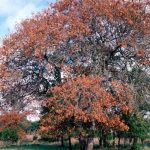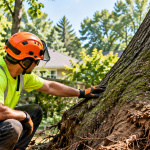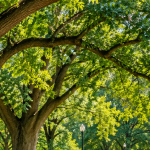
A tree can have green leaves and a full canopy while still containing hidden structural weaknesses. Internal decay, weak branch unions, cracks, root damage, old storm injuries, or excessive limb weight may cause a major branch to fail.
Foliage shows that part of the tree is still moving water and producing energy. It does not prove that the wood supporting a large limb is structurally sound.
Large-limb failure usually involves specific structural, biological, or environmental factors. It does not mean every healthy-looking tree is dangerous. However, unexplained branch failure is a strong reason to arrange a professional inspection of the remaining tree.
At Mathias Precision Tree Service, we evaluate the failed area, the rest of the canopy, and what another failure could affect. That information helps us determine whether corrective pruning, monitoring, hazardous-limb removal, or complete removal is appropriate.
Why Don’t Green Leaves Prove a Tree Is Structurally Sound?
Green leaves confirm that living tissue is functioning, but they do not reveal the condition of the wood inside a branch or trunk. A tree may continue producing a full canopy while decay or cracking weakens a critical attachment.
Trees contain living tissue near the outside of their trunks and branches. That tissue can continue transporting water and nutrients even when interior wood has lost strength.
This difference explains why a tree may look normal from the yard shortly before a limb falls. The canopy can remain green because the tree is biologically active, even though one branch union or internal section has become structurally weak.
A professional evaluation considers both tree health and structural condition. Those are related, but they are not the same thing.
How Can Hidden Decay Weaken a Large Branch?
Hidden decay can gradually reduce the amount of sound wood supporting a limb without producing obvious canopy symptoms. Decay near a branch attachment is especially concerning because that area carries substantial mechanical stress.
Decay may develop inside a trunk, limb, or old wound. The outer surface can appear intact while internal wood continues to deteriorate.
Cavities, loose bark, fungal growth, and discolored wood may suggest decay, but they do not reveal its full extent. Some weakened areas produce few visible signs from the ground.
The location of the decay matters as much as its presence. A small defect in one part of a tree may have limited structural importance. A similar defect at the base of a heavy limb may require closer evaluation.
No single cavity, mushroom, or discolored area proves that removal is necessary. Our arborist consultations consider the defect, remaining sound structure, tree condition, and nearby targets together.
How Do Weak Branch Unions Contribute to Failure?
Weak branch unions can separate when the connection between a limb and the trunk cannot support the load placed on it. Narrow attachments, co-dominant stems, and included bark are common structural concerns.
Co-dominant stems are two or more stems of similar size growing from the same area. When the stems form a narrow angle, bark may become trapped between them instead of forming a strong wood connection.
This trapped material is called included bark. As the stems increase in diameter, the connection may become more stressed and more likely to split.
A visible seam, ridge, opening, or crack where two large stems meet may justify professional evaluation. However, appearance alone cannot determine the strength of every union.
Some narrow unions remain stable for years, while others develop cracks or decay. The size of the stems, canopy weight, prior failures, and surrounding targets all affect the risk.
Why Are Overextended Limbs More Vulnerable?
Long horizontal limbs can place substantial leverage on their attachment points, especially when much of their weight is concentrated near the ends. Leaves, smaller branches, rain, ice, and fruit can add to that load.
An overextended limb is not automatically unsafe. Its condition depends on its attachment, size, length, internal structure, previous pruning, and position within the canopy.
Problems can develop when a branch keeps growing outward without enough interior structure to distribute the load. The added leverage may expose an existing weakness that was not noticeable from the ground.
Selective reduction may sometimes shorten an overextended limb and reduce end weight. This work must preserve suitable growth points and avoid unnecessary stress. Our professional tree-pruning service provides more information about the corrective pruning methods we offer.
Pruning can reduce certain risks, but it cannot guarantee that a limb or tree will never fail.
Can Previous Storms Cause a Branch to Fall Later?
Wind, ice, heavy rain, or snow can damage a branch without causing it to fall immediately. A crack may form during one weather event and widen later under ordinary loading.
Delayed storm damage can be difficult to recognize because the canopy may return to a normal position. Leaves can remain green, and the damaged branch may stay attached for days, weeks, or longer.
Movement during a storm can also worsen weak unions, old wounds, and internal decay. The weather event may expose an existing problem rather than create the entire defect.
Property owners may notice fresh cracks, torn bark, hanging branches, or a new gap in the canopy. Other storm-related damage may remain hidden until the branch moves again.
Our article on spotting storm-weakened trees in St. Louis explains the warning signs to look for after severe weather. An unexplained failure outside an active storm still requires its own evaluation.
Can a Large Live Branch Fall During Calm Weather?
A live branch can sometimes fall during calm or hot weather without an obvious trigger. Arborists may describe this type of event as sudden branch drop or summer limb drop.
There is no single explanation that applies to every case. Branch structure, internal defects, limb weight, temperature, moisture conditions, and previous damage may all contribute.
The fallen limb may still carry green leaves because the branch was alive before it separated. That makes live branch failure different from dead branch failure, where dead wood breaks away after losing moisture and strength.
Calm weather does not prove that the tree had no prior damage. A branch may have been weakened by an earlier storm, decay, root stress, or a crack that expanded gradually.
A professional inspection cannot guarantee that another branch will never fall. It can identify visible defects, assess likely contributing factors, and recommend reasonable risk-reduction work.
How Can Old or Improper Pruning Affect Branch Strength?
Large cuts, topping, flush cuts, and poorly placed pruning can create long-term structural problems. Damage may not become apparent until years after the original work.
A large pruning wound gives the tree a substantial area to seal around and compartmentalize. If decay develops behind the wound, the remaining branch or trunk may lose strength.
Topping removes major portions of the canopy and often produces vigorous new shoots. Those shoots may grow rapidly from areas that do not have the same attachment strength as naturally developed branches.
Flush cuts remove the branch collar, which is the swollen area where a branch joins the trunk or a larger limb. Damaging this area can interfere with the tree’s natural response to the wound.
Corrective pruning may improve some previously pruned trees, but it cannot restore wood that has already decayed. The remaining structure must be evaluated before deciding how much work is appropriate.
Can Root Damage Cause Branches in the Canopy to Fail?
Root damage can affect the stability, water balance, and overall condition of the entire tree. Construction, trenching, grade changes, soil compaction, and root loss are common concerns around developed properties.
Roots anchor the tree and supply water and nutrients. Damage to a significant portion of the root system may place stress on the canopy or reduce the tree’s ability to respond to other problems.
The effects are not always immediate. A mature tree may remain leafy for a period after nearby excavation, driveway work, utility installation, or landscaping changes.
Root problems may contribute to thinning, dieback, reduced growth, instability, or decline. Those symptoms can also have other causes, so one visible change should not be treated as a complete diagnosis.
During an inspection, we may review the root flare, surrounding soil, drainage patterns, construction history, and recent changes around the tree.
Can Pests or Disease Weaken a Tree That Still Looks Healthy?
Some pests and diseases can weaken wood, roots, or water-conducting tissue before severe canopy decline becomes obvious. Their effects vary according to the tree, affected tissue, and progression of the problem.
Small areas of damage may have little structural effect. More extensive injury near a major branch attachment, trunk, or root system can be more serious.
Bark changes, exit holes, abnormal growth, fungal structures, dead sections, or unusual leaf symptoms may justify closer evaluation. None of these signs should be used alone to diagnose the cause.
Environmental stress can also reduce a tree’s ability to respond to pests, disease, and injuries. Heat, drought, changing soil moisture, storms, ice, and other loads may interact with existing defects.
A tree should be evaluated as a complete system rather than diagnosed from a single leaf, insect, wound, or fungal growth.
What Warning Signs Can Be Seen From the Ground?
Several visible signs may justify professional evaluation, although their severity cannot be determined from appearance alone. Property owners should observe from the ground and avoid climbing or testing limbs themselves.
Warning signs may include:
- Cracks near a major branch union
- Bark separating where two stems meet
- Cavities or visibly decayed areas
- Fungal growth near the trunk or a branch attachment
- Previously broken limbs
- Long horizontal branches with heavy growth near their ends
- Canopy sections with thinning or dieback
- Broken branches hanging in the canopy
- New movement or separation at a branch union
- Recent construction or excavation near the roots
The absence of visible warning signs does not guarantee that a tree is free from structural defects. Internal decay and small cracks may be difficult to see from the ground.
Do not strike the tree, cut into a suspected defect, climb for a closer look, or pull on a damaged branch. Those actions may worsen the damage or place someone beneath an unstable limb.
What Should You Do After a Large Limb Falls?
Keep everyone away from the affected area and arrange an inspection of the remaining tree. Removing the fallen branch alone does not identify or correct the reason it failed.
Take these immediate precautions:
- Keep people, pets, and vehicles outside the drop zone
- Look for additional hanging or cracked branches from a safe distance
- Stay away from downed or damaged power lines
- Contact the utility provider or emergency services if electrical lines are involved
- Photograph visible damage only if it is safe
- Arrange a professional evaluation of the remaining canopy
Do not stand beneath the tree to inspect the break. Avoid using a ladder or trying to remove a suspended branch with a chainsaw, pole saw, rope, or vehicle.
A failed limb can change how weight is distributed through the remaining canopy. Related branches may also have similar attachments, decay, or storm damage.
When Is a Broken or Hanging Limb an Emergency?
A broken limb is an emergency when it creates an immediate threat to people, structures, vehicles, utilities, or access. Suspended branches and split unions can move without warning.
Urgent situations may include a large limb hanging over an occupied area, a branch resting on a roof, or damage involving electrical lines. A tree blocking a driveway, road, or building entrance may also require immediate response.
Keep the area clear while waiting for help. If utility lines are involved, stay well away and contact the utility provider or emergency services.
Our 24/7 emergency tree service is intended for immediate hazards such as fallen trees, hanging limbs, blocked access, and severe structural damage. A stable tree with no immediate target may be handled through a scheduled consultation instead.
Can the Rest of the Tree Be Preserved?
One failed limb does not automatically mean the whole tree must be removed. Preservation may be reasonable when enough sound structure remains and the identified risks can be reduced to an acceptable level.
Possible recommendations may include selective pruning, crown reduction, removal of damaged branches, deadwood removal, or continued monitoring. The appropriate choice depends on why the limb failed and what remains.
The size and location of the wound matter. A failure that exposes extensive decay or splits a major union may have different implications than the loss of one isolated limb.
Nearby targets also affect the decision. A defect over an occupied home, driveway, playground, or public walkway carries different consequences than the same defect over an unused area.
Our objective is to recommend work that matches the tree’s condition and the actual risk. Preservation should be responsible, not based only on the fact that the remaining canopy is green.
When Can Corrective Pruning Reduce Future Risk?
Corrective pruning may reduce future risk when specific weak, damaged, dead, or overextended branches can be addressed without compromising the tree. The pruning plan should respond to the defect rather than remove branches without a clear purpose.
Crown reduction can sometimes shorten long limbs and reduce end weight. Selective removal may address damaged, crossing, dead, or poorly attached branches.
Excessive pruning can create new stress and structural problems. Removing too much live canopy at one time may affect the tree’s energy production, balance, and response growth.
Pruning also cannot remove internal decay from the trunk or repair severely compromised roots. It is one possible risk-reduction tool, not a guarantee against future failure.
When Does Complete Tree Removal Become Necessary?
Removal may become the responsible recommendation when the remaining tree has extensive decay, severe structural defects, repeated major failures, or too little sound structure to retain safely. The consequences of another failure are also considered.
A large tree may need removal if a critical trunk or root defect cannot be corrected through pruning. Multiple failed unions or substantial canopy loss may also leave the tree poorly balanced.
The presence of one crack or cavity does not automatically require removal. We consider defect location, severity, tree condition, remaining structure, and nearby targets before recommending complete tree removal.
If removal is recommended, the reason should be explained clearly. Property owners should understand why preservation options are insufficient for that particular tree.
What Happens During an On-Site Evaluation?
An on-site evaluation examines the failed limb, the remaining tree, and the consequences of another failure. The process is tailored to the conditions visible at the property.
Our team may evaluate:
- The position and pattern of the failed limb
- The exposed break and remaining attachment
- Branch unions, cracks, seams, and visible decay
- Previous pruning wounds and broken branches
- Canopy balance and remaining overextended limbs
- Trunk condition and visible root flare
- Soil disturbance or recent construction near the roots
- Recent storms or landscape changes
- Homes, vehicles, walkways, utilities, and occupied areas nearby
We then consider whether the property needs scheduled corrective work, hazardous-limb removal, monitoring, emergency response, or complete removal.
A visual evaluation cannot promise that a tree will never fail. It provides a professional basis for identifying visible concerns and choosing reasonable next steps.
Which Tree Service May Be Appropriate?
The correct service depends on whether the tree presents an immediate hazard and whether it can be retained. Not every unexplained limb failure requires emergency removal.
A scheduled arborist consultation is appropriate when the area can remain restricted and there is no immediate threat. The consultation focuses on the cause of the failure, the remaining structure, and available options.
Corrective pruning may be recommended when damaged, weak, or overextended limbs can be addressed while preserving the tree. Deadwood or hazardous-limb removal focuses on specific branches rather than the entire tree.
Emergency service is appropriate for hanging limbs, blocked access, damaged utilities, or unstable sections threatening occupied areas. Complete removal is considered when the tree cannot be retained at an acceptable level of risk.
Mathias Precision Tree Service works throughout our verified St. Louis and St. Charles County service areas. These include established neighborhoods in communities such as Hazelwood, Florissant, Chesterfield, St. Charles, O’Fallon, and St. Peters.
What Affects the Cost of Corrective Tree Work?
The estimate depends on the tree, the failed limb, site access, required equipment, urgency, and cleanup scope. A ground-level branch in an open yard differs from a suspended limb over a home or utility line.
Important cost factors include tree and limb size, working height, accessibility, and proximity to structures. The number and condition of affected branches also influence the scope.
Some projects require climbing, aerial lifts, controlled rigging, or crane support. Limited access, fences, steep ground, nearby buildings, and utility conflicts can affect equipment choices.
Cleanup requirements should also be clear. The estimate may account for lowering branches, cutting material, chipping debris, hauling wood, and protecting the surrounding property.
Scheduled work and urgent response are evaluated differently because emergency conditions may require faster mobilization or specialized equipment. We provide an estimate based on the conditions found during the site visit rather than using an unsupported flat price.
How Do St. Louis Conditions Affect Mature Trees?
St. Louis-area trees may experience changing loads from thunderstorms, strong winds, heavy rain, ice, snow, heat, and periods of limited moisture. Those conditions can expose defects that have developed over many years.
The National Weather Service office serving St. Louis tracks severe weather across eastern Missouri. However, weather alone does not explain every branch failure.
Older neighborhoods in St. Louis City and St. Louis County often contain mature shade trees near homes, garages, sidewalks, and utility lines. St. Charles County properties may also have large trees near expanding landscapes, driveways, and newer construction.
The surrounding property affects the consequences of failure. A large limb over an unused section of a wide yard presents a different situation than the same limb over a bedroom, parked vehicle, or busy walkway.
Local weather history, recent construction, and the tree’s position all provide useful context during an inspection.
Frequently Asked Questions
Can a healthy tree suddenly drop a large branch?
Yes. A tree may have green leaves while a major limb contains hidden decay, cracks, a weak attachment, or excessive mechanical stress. The cause should be evaluated before assuming the rest of the tree is safe or unsafe.
Why do live branches fall when there is no wind?
Live limbs can occasionally fail during calm or hot conditions, sometimes described as sudden branch drop or summer limb drop. There is no universal cause, and several structural or environmental factors may contribute.
Does one fallen limb mean the whole tree is dangerous?
No. One failed limb does not automatically mean the tree needs removal. The exposed break, remaining canopy, trunk, roots, branch unions, and nearby targets should be inspected before deciding what work is necessary.
Can pruning prevent large branches from falling?
Pruning can reduce certain risks by removing damaged branches or reducing weight on overextended limbs. It cannot eliminate every possibility of branch or tree failure.
Should the tree be inspected after a large limb falls?
Yes. An inspection can help determine why the limb failed and whether the remaining canopy contains similar defects, cracks, decay, or weight distribution concerns.
What signs suggest that another branch may fall?
Fresh cracks, separating bark, hanging branches, split unions, visible decay, and new movement may indicate a concern. The absence of visible signs does not guarantee that the remaining branches are structurally sound.
When is a fallen or hanging limb an emergency?
The situation is urgent when a limb threatens people, buildings, vehicles, electrical lines, roads, driveways, or occupied walkways. Keep everyone away and request professional help rather than attempting overhead removal.
Schedule an Evaluation After Unexplained Limb Failure
An unexplained large-limb failure should be evaluated before the area beneath the tree returns to normal use. The fallen branch may be only one visible part of a larger structural concern.
Mathias Precision Tree Service serves property owners throughout St. Louis and St. Charles Counties. Our team can assess the remaining canopy, branch unions, visible decay, previous damage, nearby targets, and the exposed break.
We’ll explain whether scheduled pruning, hazardous-limb removal, monitoring, emergency work, or complete removal is the appropriate next step. Request an on-site estimate to have the tree evaluated based on its actual condition and surroundings.