
Healthy trees add shade, character, privacy, and value to properties throughout St. Charles. When a tree becomes damaged, overgrown, diseased, or structurally unstable, however, it can threaten roofs, vehicles, utility lines, walkways, and the people nearby.
At Mathias Precision Tree Service, we help homeowners, businesses, and property managers make informed decisions about their trees. Our services in St. Charles include tree removal, pruning, trimming, stump grinding, arborist consultations, plant health care, and 24/7 emergency response. We have served St. Charles and the surrounding region for more than 20 years, with ISA Certified Arborists providing professional evaluations and practical recommendations.
Whether you are concerned about a leaning tree, preparing for a construction project, or trying to preserve a mature shade tree, we can evaluate the situation and provide a written estimate. Call us at (314) 228-6510 or request an on-site consultation.
Complete Tree Care for St. Charles Properties
Our tree services address both immediate hazards and long-term tree health. We tailor the work to the tree’s condition, location, species, and relationship to nearby structures.
A mature tree growing in an open backyard may require a different approach than one extending over a roof, fence, parking area, or neighboring property. Before recommending work, we consider what the property owner wants to accomplish and whether the tree can be maintained safely.
Tree Removal
Tree removal is appropriate when a tree is dead, severely decayed, structurally unstable, or located where it cannot be retained safely. Removal may also be needed when roots or branches interfere with construction and no practical preservation option is available.
Our tree removal services include climbing, lift-assisted removal, and crane-assisted removal. We select the method based on the tree’s size, condition, access, and proximity to buildings or other obstacles. Our team dismantles difficult trees in controlled sections and cleans up the resulting wood and debris. Stump grinding can be added as a separate service when appropriate.
Removal may be worth considering when you notice:
- Extensive trunk decay or large cavities
- A sudden or increasing lean
- Major root damage or soil lifting around the base
- Large dead sections in the canopy
- Repeated branch failures
- A split trunk or weak main union
- Damage that leaves too little sound canopy to preserve
Not every declining tree needs to be removed. When the right choice is unclear, an arborist assessment can help distinguish a manageable condition from an unacceptable risk.
Tree Pruning
Professional pruning removes selected branches to improve structure, reduce hazards, provide clearance, or support the tree’s long-term health. It is more precise than cutting branches simply because they look overgrown.
Our tree pruning service may include deadwood removal, crown thinning, crown raising, crown reduction, clearance pruning, and pruning for young or ornamental trees. We begin with an assessment so that the cuts support a defined objective.
Proper pruning can reduce the chance of dead limbs falling onto yards, sidewalks, roofs, or parking areas. It can also improve visibility around driveways and allow more appropriate clearance from buildings. Poor cuts, excessive canopy removal, and topping can create decay, weak new growth, and unnecessary stress.
Tree Trimming for Clearance and Appearance
Tree trimming is often requested when branches obstruct a driveway, brush against a building, hang over a gathering area, or interfere with the intended use of a property. Our tree trimming services focus on resolving these practical concerns without removing more live growth than necessary.
Branches near energized utility lines require special caution. Property owners should not attempt to cut limbs that touch or could fall into electrical equipment. If the concern involves a utility-owned line, contact the utility provider first for direction. We can assess other clearance issues and explain what work is appropriate.
Stump Grinding
Stump grinding converts an unwanted stump into wood chips below the surrounding ground level. It can make mowing easier, restore usable space, and remove an obstacle from a lawn or managed landscape.
Our stump grinding service begins with an evaluation of the stump’s size, location, and surroundings. We also ask how the area will be used afterward because plans for grass, landscaping, or construction may affect the scope of work.
Grinding does not usually remove every root extending through the soil. It addresses the visible stump and the central portion below grade. Before work begins, underground utilities and nearby irrigation, landscape lighting, fences, or hardscaping should be identified.
Emergency Tree Service and Storm Cleanup
Call for emergency assistance when a tree or limb creates an immediate threat to people, buildings, vehicles, access routes, or other property. Examples include a tree on a structure, a hanging branch over an occupied area, a newly split trunk, or a tree that suddenly begins leaning.
We provide 24/7 emergency tree service throughout St. Charles and the surrounding county. Our team assesses the immediate hazard, determines how to stabilize or remove damaged material, and clears tree debris included in the agreed scope.
Stay away from any fallen tree or branch involving a power line. Assume the line is energized, keep other people out of the area, and contact the utility company or emergency services. Do not approach the tree to inspect it yourself.
Arborist Consultations and Tree Health Care
An arborist consultation is useful when you want an objective evaluation before deciding whether to prune, treat, monitor, or remove a tree. Our arborist consultation services assess tree vigor, structural concerns, pests, disease symptoms, root conditions, cracks, decay, weak attachments, and lean.
Trees growing in suburban settings can experience compacted soil, restricted root areas, construction injury, lawn-equipment damage, and competition from turf. When soil conditions or nutrient availability are contributing to decline, our fertilization and soil improvement services may be considered after an evaluation. Treatment should address an identified need rather than follow a one-size-fits-all schedule.
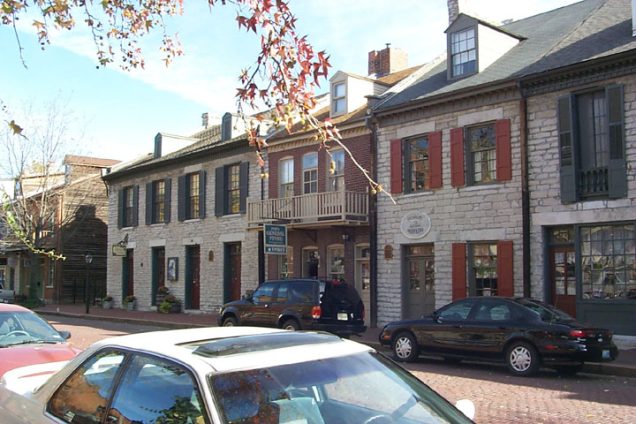 About Tree Care in St. Charles, MO
Tree care in St. Charles is shaped by the weather and the ground beneath it. Many properties here sit on heavy clay and river-influenced soils that swell when wet and shrink in dry spells, which stresses root systems and can slowly loosen a tree’s footing over the years. On top of that, the severe thunderstorms, straight-line winds, and occasional ice storms that move through eastern Missouri tend to find weak branch unions and compromised roots long before anything looks wrong from the ground. Local trees also face steady pest and disease pre
ssure — emerald ash borer has caused extensive ash mortality across Missouri, and oak wilt calls for careful diagnosis before treatment while suburban conditions like compacted soil, restricted root zones, and construction injury quietly work against mature trees. Because so many of these problems develop out of sight, we begin with an assessment of the species, soil, structure, and site rather than assuming what a tree needs, so the recommended work matches the tree’s actual condition.
Tree Concerns Common in St. Charles
Storm exposure, changing soil moisture, insects, disease, and development pressures can all affect trees in St. Charles. Recognizing changes early may create more options for corrective care.
Wind and Thunderstorm Damage
Strong thunderstorms can break large limbs, split weak unions, and uproot trees with compromised roots. The National Weather Service notes that severe-thunderstorm winds can break large branches, topple trees, and cause structural tree damage.
Visible storm damage is not the only concern. Cracks can form at branch unions, roots may loosen without complete uprooting, and broken limbs can remain suspended in the canopy. After a significant storm, examine trees from a safe distance and look for new leans, hanging branches, fresh splits, exposed roots, or changes in the soil around the trunk.
Emerald Ash Borer
Ash trees deserve close attention because emerald ash borer has caused extensive mortality in Missouri. Signs may include thinning or dead canopy branches, new shoots growing from the trunk, woodpecker activity, pale patches where bark has been removed, and S-shaped galleries beneath loose bark.
Treatment may be possible for selected healthy ash trees, but heavily infested or structurally compromised specimens may require removal. An assessment can help identify whether a tree is an ash, determine its present condition, and explain realistic options.
Oak Wilt and Other Health Problems
Unusual leaf loss, discoloration, canopy thinning, fungal growth, bark changes, or progressive branch death should be investigated rather than diagnosed from appearance alone. Similar symptoms can result from root injury, drought stress, insects, disease, soil problems, or several factors acting together.
Oak wilt is one condition that requires careful diagnosis and management. The Missouri Department of Conservation notes that professional treatment may help protect certain healthy, high-value red oaks near infected trees before symptoms appear.
Our goal is to identify the likely cause before recommending treatment. An accurate diagnosis helps property owners avoid paying for unnecessary applications or delaying action when a problem is serious.
When Should You Call a Tree Professional?
You should arrange an evaluation when a tree changes noticeably, threatens an important target, or requires work that cannot be performed safely from the ground.
Call us when you observe:
- Dead, cracked, or hanging branches
- Mushrooms or fungal growth near the trunk
- Cavities, loose bark, or visible decay
- A new lean or movement in the root plate
- Branches resting on a roof or building
- Rapid canopy thinning or unusual leaf discoloration
- Trunk sprouts or heavy woodpecker activity on an ash tree
- Repeated limb failures
- Roots damaged by excavation, grading, or construction
- A tree blocking safe access or visibility
Tree work becomes particularly hazardous when it involves climbing, chainsaws, unstable wood, rigging, heavy sections, steep terrain, or nearby utilities. A professional evaluation can establish whether pruning, monitoring, treatment, or removal is the appropriate response.
St. Charles Tree Rules and Right-of-Way Responsibilities
Property owners should confirm applicable city requirements before removing multiple trees, clearing a large site, or performing work that affects public rights-of-way. St. Charles tree-preservation rules require a permit in certain situations involving grading or the removal of at least 50 percent of qualifying live trees on applicable parcels. The ordinance also lists exceptions, so requirements depend on the property and project.
The city also states that property owners are responsible for maintaining trees on their property, including trees commonly described as street trees. For qualifying dangerous, dead, or damaged trees in the city right-of-way, St. Charles offers a program under which the city pays 50 percent of approved trimming or removal costs and the landowner pays the remainder. Eligibility and the need for work are determined by the city.
Because municipal rules and program eligibility can change, contact the City of St. Charles before relying on a permit exemption or cost-sharing program. During our estimating process, we can discuss known permitting considerations and clarify responsibilities for the proposed work.
What Our Tree Service Process Includes
Our process is designed to give you a clear recommendation, defined scope, and written price before routine work begins.
1. Consultation Request
Call (314) 228-6510 or submit a request through our website. Tell us what you have noticed, where the tree is located, and whether there is an immediate safety concern.
2. On-Site Evaluation
Our arborist evaluates the tree, access, surrounding property, and potential work zone. We discuss your priorities and determine whether the tree should be pruned, treated, monitored, or removed.
3. Written Estimate
We provide a proposal describing the recommended work and price. The estimate should make clear whether stump grinding, wood removal, debris cleanup, or other requested items are included.
4. Scheduling and Preparation
After approval, we schedule the project and plan the equipment, access, and work-zone controls required. Property owners may need to move vehicles, unlock gates, identify private underground systems, or notify neighbors if shared access is involved.
5. Tree Work and Cleanup
Our team completes the agreed work and cleans the service area. When requested in advance and site conditions allow, arrangements may be made to retain logs or wood chips from a removal.
What Determines the Cost of Tree Service?
Tree-service pricing depends on the labor, equipment, access, and risk involved. A small tree in an open lawn generally requires fewer resources than a large, decayed tree extending over a house.
Important cost factors include:
- Tree height and trunk diameter
- Species and wood characteristics
- Tree health and structural stability
- Proximity to buildings, fences, utilities, or traffic
- Equipment access and ground conditions
- Rigging, crane, lift, or climbing requirements
- Number and size of branches being pruned
- Debris volume and disposal arrangements
- Stump size and grinding access
- Emergency timing and storm conditions
- Permit or traffic-control requirements
Photos can help us understand the general situation, but an on-site inspection is usually necessary for an accurate quote. It allows us to see the whole tree, assess access, and identify hazards that may not be visible in a picture.
Why Choose Mathias Precision Tree Service?
Experience, qualified evaluation, appropriate equipment, and clear communication matter when tree work takes place near valuable property. Mathias Precision Tree Service has served St. Charles and the surrounding region for more than two decades. Our company reports that it is licensed, bonded, and insured, employs ISA Certified Arborists, belongs to the Tree Care Industry Association, and maintains BBB accreditation.
We approach each project with three practical goals: recommend work that fits the tree’s actual condition, complete the approved scope safely, and leave the property orderly. You can learn more about our background and approach on our About Us page.
Frequently Asked Questions
Do you provide free tree-service estimates in St. Charles?
Yes. We provide free estimates for proposed tree work. An on-site visit allows us to evaluate the tree, access, nearby structures, equipment needs, and cleanup requirements before preparing a written proposal.
Can a damaged tree be saved instead of removed?
Sometimes. The answer depends on the extent and location of the damage, the amount of sound wood remaining, the tree’s species and health, and what could be struck if it failed. Pruning, cabling, treatment, or monitoring may be appropriate in some cases. Severe root failure, advanced decay, or major structural damage may make removal the safer option.
Is stump grinding automatically included with tree removal?
Stump grinding should be confirmed in the written scope because it is offered as an optional service with tree removal. We can evaluate the stump and add grinding when you want the area returned to a more usable condition.
Do I need a permit to remove a tree in St. Charles?
Not every routine residential tree removal requires a permit, but permits may apply to certain grading, development, or large-scale tree-removal activities. Rules depend on the parcel and project. Contact the City of St. Charles for an official determination before work begins.
What should I do if a tree falls on my house?
Move everyone away from the affected area and call emergency services if there is an immediate threat to life, fire, or structural safety. If power lines are involved, stay clear and contact the utility provider. Once the area is safe, call us for emergency tree assessment and removal. Photograph damage only from a safe location and contact your insurance company promptly.
When is the best time to prune trees?
The best timing depends on the species, condition, and reason for pruning. Dead or immediately hazardous branches may require attention at any time. Some structural and maintenance pruning is well suited to the dormant season, while other objectives may require different timing. We can recommend a schedule after identifying the tree and evaluating its needs.
Do you serve commercial properties in St. Charles?
Yes. We provide tree care for residential and commercial properties across St. Charles and the surrounding service area. Commercial work may include hazard evaluation, clearance pruning, removal, storm response, stump grinding, and ongoing tree-care planning.
Schedule Tree Service in St. Charles, MO
If you are concerned about a tree on your home, business, rental property, or managed site, we can help you understand the condition and choose an appropriate next step.
Call Mathias Precision Tree Service at (314) 228-6510 or request a free tree-service estimate. Our team serves St. Charles with professional tree removal, pruning, stump grinding, arborist care, and 24/7 emergency assistance.
