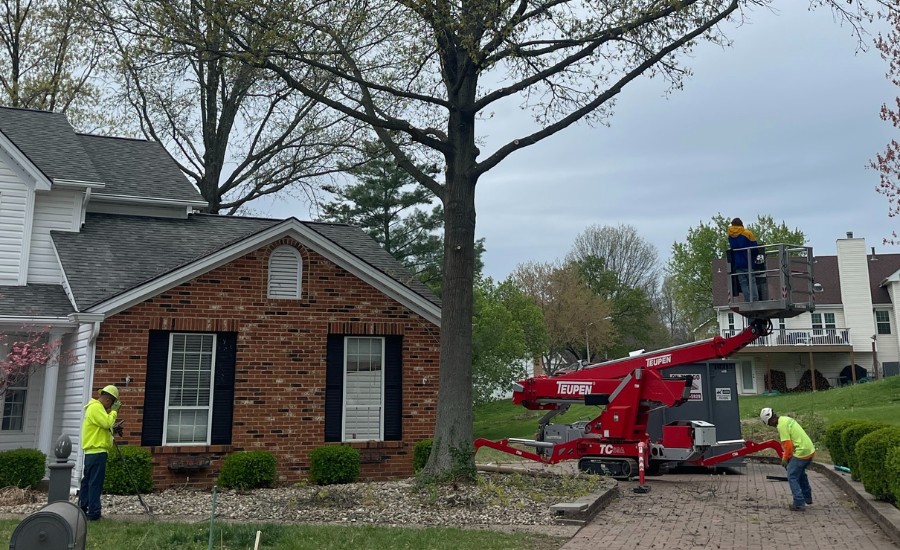
Safe, Professional Tree Evaluations for Residential and Commercial Properties!
Not every hazardous tree shows obvious signs of trouble. A tree may look healthy on the outside while hidden decay, weakened roots, or structural defects are quietly increasing the risk of failure. In St. Louis and surrounding communities, mature trees face constant stress from strong thunderstorms, high winds, heavy rainfall, ice storms, and years of urban growth, making regular tree risk assessments an important part of protecting your property.
Mathias Precision Tree Service brings two decades of Missouri-specific expertise to every evaluation. We don’t guess, we use proven assessment methods backed by ISA-standards to determine actual risk levels and recommend solutions that match your property’s unique situation.
When a Tree Risk Assessment Is Necessary
Missouri trees face unique stressors that differ from other regions:
- Urban Soil Compaction: St. Louis development has compressed soil around countless mature trees, restricting root growth and stability over decades.
- Extreme Weather Cycles: Our region experiences freezing winters, hot humid summers, straight-line winds exceeding 70 mph, and occasional tornadoes, all factors that weaken tree structure over time.
- Aging Tree Population: Many neighborhood oaks and maples planted in the 1960s-80s are now reaching the end of their natural lifespan, making them more prone to sudden failure.
- Root Zone Disturbance: Recent landscaping, utility work, or new construction near established trees can damage root systems without visible above-ground warning signs.
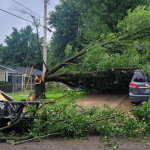
- Previous Storm Damage: Trees that survived past storms may have hidden cracks, split limbs, or compromised root plates that will fail under the next severe weather event.
Tree Risk Assessment in St. Louis, MO Requires Local Knowledge
Walking around your property and looking at a tree won’t reveal internal decay, root rot, or structural weaknesses developing beneath the bark. Our assessment process goes deeper than surface-level observations:
Every assessment starts with an on-site evaluation where our crew assesses:
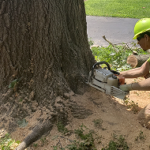
- Internal trunk decay using resistance drilling when needed
- Root plate stability and soil conditions at the base
- Weak branch unions with included bark that look solid from outside
- Previous wound healing and whether the tree successfully compartmentalized damage
- Proximity to targets (homes, driveways, sidewalks, play areas, power lines)
- Species-specific failure patterns (oaks split differently than maples, which fail differently than pines)
The Assessment Process
Every evaluation follows a structured approach developed through years of working in Eastern Missouri’s specific conditions:
- Step 1: Target Analysis
We identify what would be damaged if the tree or major limbs failed. A tree leaning over a deck presents different risks than the same tree in an open field. - Step 2: Visual Defect Detection
Our ISA-Certified Arborists scan for cough indicators: cracks, cavities, fungal growth, deadwood, canopy dieback, and unusual leaf patterns suggesting root problems. - Step 3: Structural Integrity Check
We examine trunk taper, branch attachment angles, codominant stems, and previous pruning cuts to assess how well the tree can handle wind load and weight. - Step 4: Root Zone Investigation
We inspect the critical root zone for soil compaction, grading changes, Grades, girdling roots, and signs of root decay that compromise anchorage. - Step 5: Risk Rating and Recommendations
Using ISA-TRAQ (Tree Risk Assessment Qualification) standards, we assign a risk level and provide specific actions whether that’s monitoring, pruning, cabling, or removal.
What’s Included With a Tree Risk Assessment
Your assessment package includes concrete deliverables you can use immediately:
- Complete Documentation:
- Written report detailing all observed defects and their severity
- Photographs documenting problem areas with annotations
- Risk rating for each tree evaluated (low, moderate, high, extreme)
- Priority timeline for recommended actions
- Actionable Recommendations:
- Specific pruning techniques that reduce risk without harming tree health
- Cabling and bracing options for trees worth preserving
- Removal justification when risk cannot be mitigated safely
- Cost estimates for all recommended work with clear pricing
- Long-Term Monitoring Plan:
- Schedule for follow-up inspections based on risk level
- Signs to watch for that indicate deteriorating conditions
- Seasonal care instructions to maintain tree stability
Mitigation and Post-Assessment Options
Once the assessment is complete, we provide actionable solutions:
- Canopy Weight Reduction: Thinning the tree to reduce the sail effect during high winds.
- Structural Pruning: Removing hazardous limbs while preserving the tree’s health and aesthetics.
- Controlled Removal: If the risk is critical, we use specialized equipment like cranes to dismantle the tree without damaging your landscape.
Why Mathias Precision Stands Apart in St. Louis, Missouri
- Two ISA Certified Arborists On Staff: Having certified professionals means assessments follow national standards, not guesswork.
- 20+ Years Regional Experience: We’ve seen how Missouri trees fail and know what warning signs matter most in our climate.
- Local Knowledge: We leverage extensive knowledge of Eastern Missouri’s climate and landscapes to provide customized tree care solutions for every property.
- Full Insurance Coverage: Your property is protected. We carry comprehensive liability and workers’ compensation insurance.
- Clear Pricing and No-Surprise Guarantee: We offer you a written estimate with transparent pricing. What we quote is what you pay, with no hidden fees.
- Comprehensive Care: We provide a full spectrum of tree care services, from precise pruning to disease management, all delivered with meticulous attention to detail.
- Customer Commitment: We put our clients first, ensuring their goals and satisfaction guide everything we do.
Advanced Equipment and Safety Standards
Professional tree work requires specialized gear that general contractors don’t possess:
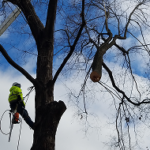
- Aerial lifts and bucket trucks for safe canopy access at height
- Cranes for controlled removal of large trees near structures
- Rigging systems to lower heavy limbs safely without dropping them
- Chippers and grapple trucks for efficient debris removal
- Stump grinders for complete root removal after tree removal
- Personal protective equipment meeting ANSI Z87.1 and OSHA standards
Every job includes property protection measures like ground mats, careful rigging, and thorough cleanup before our crew leaves.
FAQs About Tree Risk Assessment in St. Louis, Missouri
How often should I schedule a tree risk assessment in St. Louis, Missouri?
Most healthy, mature trees should be assessed every two to three years. However, trees near homes, schools, businesses, or high-traffic areas should be inspected more frequently, especially after severe thunderstorms, high winds, or ice storms.
Can storm damage create hidden problems even if my tree still looks healthy?
Yes. Strong winds and severe thunderstorms common throughout the St. Louis area can weaken root systems, split major limbs, or create internal cracks that aren’t always visible from the ground. A professional assessment can detect these hidden hazards before they become dangerous.
Do you evaluate trees growing close to homes, power lines, or commercial buildings?
Absolutely. Trees located near structures or utility lines require a more detailed risk assessment because even a small branch failure can cause significant property damage. We evaluate the tree’s condition, its likelihood of failure, and the potential consequences to help you make informed decisions.
Can you assess multiple trees on large residential or commercial properties?
Yes. We perform tree risk assessments for everything from single-family homes to apartment communities, HOAs, parks, schools, churches, and commercial properties throughout the St. Louis metropolitan area. We can prioritize higher-risk trees and provide recommendations for ongoing maintenance.
Will a tree risk assessment help me avoid emergency tree removal?
In many cases, yes. Identifying dead limbs, structural weaknesses, disease, or declining root systems early allows corrective pruning or other preventive measures before the tree becomes an emergency. Proactive assessments often reduce the likelihood of unexpected tree failures during St. Louis’s storm season.
Why should mature trees in St. Louis be inspected regularly?
Many St. Louis neighborhoods have large, mature oaks, maples, sycamores, and ash trees that are decades old. As trees age, they become more susceptible to decay, storm damage, and structural defects. Routine risk assessments help identify problems before they lead to falling limbs or tree failure.
What happens if you recommend removal but I want to keep the tree?
We explain the specific risks and let you make the final decision. We won’t force removal, but we’ll document our assessment in case failure occurs later.
Can a tree with cracks be saved?
Small healing cracks may not be dangerous. Large, growing cracks or those with decay often indicate the tree cannot safely continue. Each situation requires individual evaluation.
How long does an assessment take?
A typical residential assessment with 3-5 trees takes 1-2 hours. Larger properties or commercial sites may require half-day or full-day evaluations.
Do you assess trees for real estate transactions in St. Louis, MO?
Yes. We provide assessment reports suitable for property disclosures and can work within transaction timelines.
What if a tree fails after your assessment said it was safe?
We stand behind our work. If a tree we rated as low risk fails prematurely due to factors we should have identified, we’ll review the assessment at no cost.
Are assessment reports accepted by insurance companies in St. Louis, MO?
Yes. Our reports follow industry standards and include documentation that insurance adjusters recognize for storm damage claims.
Secure Your Property With Professional Assessment
Trees can become hazardous without obvious warning signs. A powerful storm, heavy ice accumulation, or strong winds can cause a seemingly healthy tree to fail unexpectedly. Investing in preventive tree care and risk assessments is often far more affordable than dealing with emergency removals, property damage, or potential injuries after a tree falls.
Mathias Precision Tree Service has protected St. Louis, MO homes and businesses for over 20 years. We treat your property like our own and give honest assessments without pressure.
Call today at (314) 228-6510 to schedule your tree risk assessment. Free estimates provided within two days.
Mathias Precision Tree Service
6830 Teson Rd, Hazelwood, MO 63042
Serving St. Louis, St. Charles, and Eastern Missouri
ISA Certified Arborists – Fully Insured – BBB Accredited – 20+ Years Local Experience